
Characters

—
We meet the boy in the kitchen of his family’s summer house, a cabin built at the base of an alpine region in Italy, mountains his family has climbed for generations. The only light comes through the window over the sink. The light is white and new, the kind of glow from a sun that has not yet revealed itself completely. The furthest parts of the room are not yet visible.
Ten white tiles sit below three white cupboards above a white dish rack holding yesterday’s teacups, now dry from the night air’s absorption. The table, presumably wooden, is covered with a thin grey cloth, supple in weave and worn thin from years of breakfasts, bread bases, and dark stews.
The boy sits at the table dressed in a chocolate brown sweater. The wool is somewhat irregular, suggesting it was handmade, perhaps passed down, but it still offers warmth, doing what it was made for. Unseen, but felt, is the chill on the skin after a night in blankets. Hair tussled, eyes still unfurling. A white bowl with porcelain pleats sits atop a white saucer. Although, not steaming. A glass jar, mostly filled with dark purple jam, is left open in front of a bottle of milk. The handle of a silver spoon is visible between the two.
In the next scene, we are lying low in the long grass, we are outside, and the scent is a warm, dry green. Nothing is happening except a subtle breeze pushing through and the occasional insect wobbling by. The sun is above the mountains—not that we are shown this, but the shadows of the trees in the background suggest it, as well as the light's colour, steeped in chamomile and saffron, sweating gold. Until, whoosh, the grass is broken apart by two boys, perhaps brothers, perhaps friends, racing past the camera’s frame. They are dressed in heavy cotton pants and there is the same brown sweater. The younger of the two is zipped up in a grey shell jacket, suggestive of the film's era. His jacket’s red zip and logo reveal its origins in the boom of Italian sportswear in the 80s. The boys call to each other in their beautiful Italian names, with vowels like ‘El’ and that irresistible rolling ‘r’ that sounds like a fat rattle when spoken purely.
But it is the next scene that is my favourite. We are taken to where the brothers have been racing. A huge flat rock at the edge of a glacial lake—perfect, clear water with a tendency to turn blue in the sunlight—is broken by two bare bodies throwing themselves into its crisp surface. The film is cut and reconnected so that we can now stand so close to the brothers splashing one another, the noise is a sharp shushing. The glass on our screen is dripping in the water that fell from the cloud that got stuck at the top of the mountain and made its way down the mountain, sinking through the ice and the rock, to form an irregular shape that is now working its way across the camera’s lens.
It feels like a flashback, but as the viewer, we must be shown around, meet the environment where the story will take place, and discover the size and pace of the land, the way its folding valleys can hide and expose you. We must feel the difference between wool and glacial water. We must understand how quickly the heat in the grasses can be taken away. We must witness the boys’ ease with the mountain. Their innate, physical understanding of the path to the lake. The unnecessary need for their parents to accompany them. It is as though the mountain is part of their family, that it will take care of them while also laying down a harsh and unfair boundary if crossed. We meet the boys at a time in their lives when nature is their greatest ally: a friend, a teacher, perhaps another brother.
What develops through the film is a partnership between man and mountain. It is a story that binds the generational history of the natural world's effect to our main character. It is almost as if nature itself were a character, offering something greater than all those buildings and all those lights. It stands with us in its desire to be seen, to spread its theory, revealing that its ego wants to win.
Until one day, our main character decides to not to leave for a season of work in the city, but to build a life on the side of the mountain. Hammer and tile, electricity and water. Friends bring cheese and wine and cigarettes. All of their humanness small-ed against the rambling backdrop. The mountain and its interchanging weather, its unpredictability, its dangers and its power, is accepted as a place that can hold someone, store memory, and be as big a part of a family as, say, a father could be. It can act as one’s home. Be one’s most stable ground, a constant presence. With strength stored in its mass, and new life at its edges, the mountain has the ability to summon a spirit and change a mind.
—
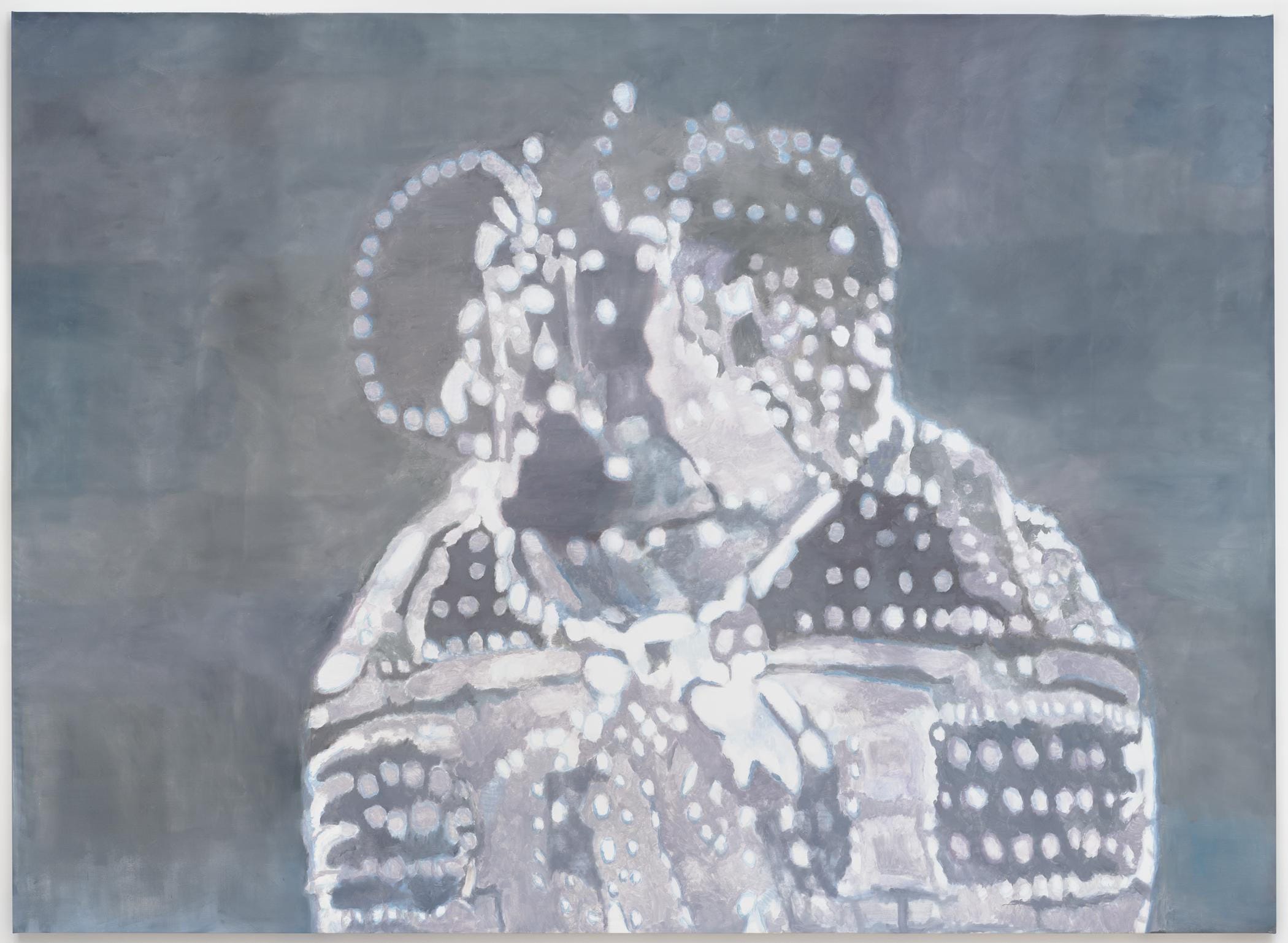
[image: Turtle, 2007, by Luc Tuymans]